Showing posts with label herpetology. Show all posts

Tuesday, March 2, 2010

"Red Pyg"


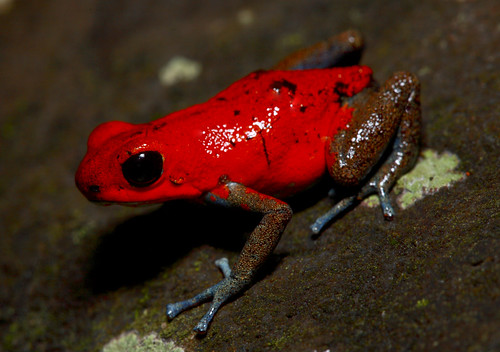
an 8x10 print, matted and sealed, will be donated to the NC Herpetological Society to raffle off for the upcoming Reptile & Amphibian Day 2010 at the NC Museum of Natural Sciences March 13, 2010. All proceeds will go to benefit this non-profit society geared towards education, research and conservation of North Carolina's diverse herpetofauna.

Tuesday, December 15, 2009

¡Bienvenidios Panama! – Part V

I sat down to a cup of coffee this morning, and for some reason it really took me back to thoughts of sitting on the patio in Farrion after a successful night in the jungle, watching flocks of parrots and ever so often a frigate bird in the distance….I had to start writing these again.

The next day, I awake in a fury of heat….the sun had risen high enough that it was radiating directly into our tent. I roll out to find breakfast being prepared for us, a traditional Panamainan breakfast composed of patacones (plantains pounded into pancake like discs and fried), home made bread, and meat fried with onions and peppers. To top it all off, some amazing, fresh Panamanian coffee. I’ve always been a cream and sugar type of guy – that will change when you have truly fresh coffee.

After taking some time to wake up and digest our wonderful meal we start to discuss our options for the rest of the day. The area we spent exploring the night before would be promising, but our guide advised us that he had a contact that might be able to direct us to a bushmaster. We decided to go and setup our trek for that evening and see what we could find along the way. Piling in the car we head back southeast from Changuinola a few miles, through the ragged highway system that links these Caribbean towns to the rest of Panama. After some time of waiting on the road construction, traffic holdups and trying to locate the proper road, we finally turn down a small unmarked two lane road that begins winding sharply around a hillside. From the car on this overcast day we spot a three-toed sloth in the treetops (what will be one of ten (yes ten!) individuals), slowly making its way from one limb to the next. The road is terribly washed out from a few of the initial rains signaling the end of the dry season. We navigate around large rocks lying in the road, severe cracks in the pavement until we come to a more lowland area. At one point, we’re trying to traverse a washout in our Nissan XTrail that would likely need more ground clearance, a suspension lift, and maybe some all terrain tires. Finally we get onto what looks like a normal looking dirt road with far less issues. As we drive past the lowland fields and scattered forests, there is an ever present chattering coming from the trees. I know I’ve heard this sound before and it takes me a few moments to realize the sound broadcasting from the forest edge is that of the strawberry or flaming poison dart frog, Oophaga pumilio .

We eventually arrive at a small, elevated house in the middle of the jungle. I’m introduced to a man named Lalo, who was an acquaintance of our guide, familiar with the area and the animals we were interested in seeing. His wife and two children also come to greet us, and we sit down to discuss the plan for our evening hike. His wife offers us coffee, a strong aroma and as fresh as you could ever imagine coffee being in a place like this. His son is playing with a box of young parrots, rescued from an area that was being cleared for agricultural purposes. Our guide begins to explain why we are visiting the country, what we’ve encountered so far, and what we would like to attempt to find on our night hike. In the background we hear the same chattering of pumilio, some of which appear to be very close. We tell him that we also are interested in the small frogs from the area. He steps away for a moment and returns with something that astounds me. He presents us with a few laminated sheets, with various forms of dendrobatid frogs and venomous snakes, with short descriptions of each species.

Visitors apparently years prior to our visit had left these guides with him, explaining that they would offer him money for these species of interest. His impression was that we were there to collect or buy various herps to take back with us! We explained to him that we only wanted to photograph such animals. He recognized that our attention repeatedly shifted back across the road to the sounds of the frogs. He got up and told us to ‘follow me.’

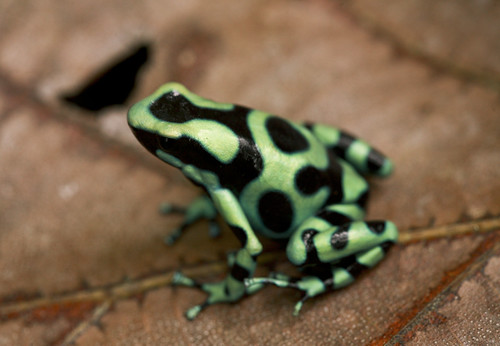
Within 20 feet of the road, opposite to his house, Lalo began pointing out frogs…..there were Dendrobates auratus amongst the leaf litter unlike any I had ever seen. Flaunting the well known green and black coloration, these frogs were enormous, bigger than any dendrobatid frog I’d seen in captivity. Side by side with the auratus were little red and orange Oophaga pumilio that we encountered – hopping about. These frogs are known as the ‘Alimarante’ morph, named for a town just southeast of Changuinola. I was amazed at the amount of variation found within the dozen or so frogs in such a small area - red with grey

legs, orange with black legs, solid orange with black flecks, all the same morph. After running around and photographing our first pumilio, we went back over to Lalo’s house to avoid the sudden downpour of rain and discuss our evening plans. Lalo knew of some local areas that would be probable bushmaster habitat, and that there had been sightings in the recent weeks prior to our arrival.

With our plan set and some cool finds already that day, we headed back to Changuinola to prepare for what would be one of the most memorable experiences of my life – for many reasons…

Monday, October 12, 2009

¡Bienvenidios Panama! - Part IV

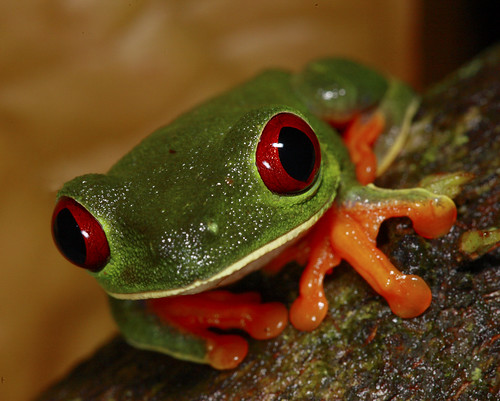
It isn't long before we find critters in the jungle. within 5 minutes of walking into the full canopy, we here the calls of Agalychinus calidryas, the red eyed tree frog. With the added reach provided by a snake hook, we were able to pull down overhanging branches where the calling males were perched. We took a moment to grab a few photos of our charismatic find, then placed him back upon his perch to continue serenading the females close by. On the lower vegetation, anoles were sleeping on top of and in between the leaves. Despite our rustling, they remained frozen in place while our flashes filled the forest vicinity with white light.

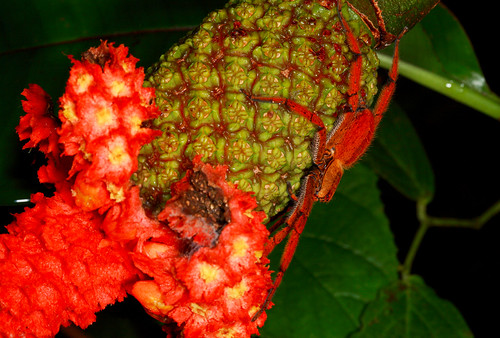
Eyes were always searching, hoping to catch a glimpse of one of the forests common inhabitants, the eyelash viper (Bothriecis schlegleii) named for the exaggerated scalation above the eyes. These small vipers are polymorphic, ranging in colors that conceal their presence amongst the bark and vegetation to vivid yellow or orange that blend in with the brilliant floral and fruit ensembles of tropical plants . They frequently inhabit the 1-2m height of the vertical vegetation structure waiting to ambush lizards or frogs. Bites from this species are not fatal, but due to their behavior bites to extremities and the face are common. This has been one of the species I have longed to see in the wild and photograph in detail, so I'm very anxious as I walk around peering at every limb while trying to keep up and the shine of lights in my view. Huntsmen spiders were frequent on the vegetation as well, and other large types similar to the orb-weavers found in the U.S. - but MUCH bigger. It wasn't til this time I realized that my friend was terrified of bugs...which made the trip all the more interesting!

As we continued on, we came across an interesting find - mannequin birds sleeping in the low trees. These birds are moderately colored with shades of yellow, white and brown, but make up for it with an outstanding call. They tolerated our flashes, grabbing a couple photos of both the male and female and we moved on to see what else we could find. At the bottom of the hill we came to a small creek with shallow depression pools off to the sides. Above the pools were more red eyed tree frogs hanging on to palm-like fronds. In the creek, there were larger ranid type frogs hopping into the shadows. One of the better finds in the creek was a large adult smokey jungle frog - this bullfrog sized amphibian is colored with contrasting shades of brown and vocalizes with a call that resembles a low hooting that gives an eerie feel to the darkness of the jungle.

We turned back after the creek and was planning on calling it an evening. We were all a bit disappointed that we hadn't come across any snakes, but still satisfied with our numerous finds that night. Just as we got close to the cottage our guide spotted a fruiting tree along the path. The tree was filled with naranjillos - fruit of the Inca, a citrus like fruit that had the exterior texture of a tomato. Mario's smile suggested that this would make for an excellent addition to breakfast. At 2:30AM we called it a night, a looong day of travel behind us, and the anticipation of what awaited us tomorrow....


¡Bienvenidios Panama! - Part III


One major highway snakes its way through the countryside transecting whats left of tropical dry forests. Small two lane divergences in the western portion split off and direct you westward towards Costa Rica or north through the cloud forests and onto the Caribbean coast. We stop in Penonome for a quick meal - Pio Pio is our dining option and a chance for me to dig deep in the memory bank, babble out some broken Spanish and hope to order something appetizing. With a couple of attempts and chuckles from the ladies behind the counter, I pay for my meal and soda. In my periphery I catch lots of stares our way as we enjoy our hard earned meal - two Canadians, an American, and a Panamanian - a ragtag bunch out of place in a corner booth.

From the backseat I'm enjoying the view of the countryside, snapping away some shots as we zip by farmland, mountains, and small towns. All of a sudden I notice a police officer on a motorbike along the road side and he begins to wave us over to the shoulder. I was told by my travel companions that government on the lower levels in the country was often corrupt, and that on many occasions money exchanged hands in lieu of citations. The officer begins rattling off in Spanish and we're having a difficult time keeping up. Mario begins to inform us that the officer is citing us for driving too fast near the pedestrian overpass, driving continuously in the left lane, and for some other minor issue. The more Mario talks with him, the more calm the officer becomes, and then asks to talk with Mario. After a few minutes, he brings his book of rules & regs over to the car and hands it to us, showing us the infractions we've committed. Mario tells us in English "I think this cop likes money." I shove $20 in his regulation book and hand it back to him. He informs Mario that it would be beneficial to ride in the front seat while traveling with us to avoid any other enforcement issues and sends us on our way.

It's late in the afternoon on our drive and we're keeping our eyes out for any significant wildlife, reptiles especially. So far the only highlight was seeing a roadkill silky anteater on the highway. A few minutes later and we notice a snake on the road, unfortunately already clipped by passing traffic. We stop to take a quick look.... it's a parrot snake (Leptophis ahaetulla), similar to the green snakes found in North America These long, slender serpents are primarily arboreal and feed upon tree frogs. They possess small rear fangs and are mildly venomous, more so an irritant to a larger animal, however reactions tend to vary and can cause some significant swelling. Excited for finding an actual reptile we hop back in and continue on towards our destination.

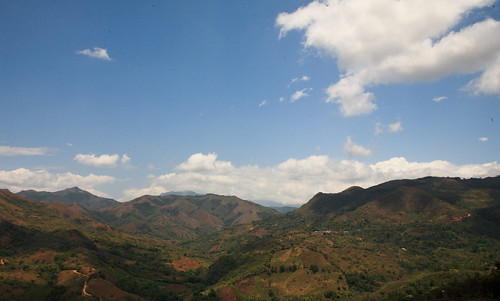
We begin the ascent into the mountains near Fortuna just around dark. This area is characterized by sharp winding roads that are continuously under attack by the elements and significant elevation changes. This is cloud forest habitat, home to such species as solitary eagles, quetzals, mountain vipers and black milksnakes. It begins to rain, periodically heavy at times, making the drive a bit challenging. The temperatures begin to plummet as we climb from 60m above sea level, going from roughly 85 degrees in the late evening to the lower 60s as we reach about 1.1km in elevation. We begin seeing one of the more common inhabitants of the country, cane toads, hopping along the roadsides. About 20 minutes after the rain began, we're slamming on brakes as our driver cries out "snake!" I grab my camera and pile out to find disappointed faces. In my friend's hands is a spectacular species that I was hoping to see, Rhinobothryum bovallii - the banded snake, writhing from being clipped by a car ahead of us. It was a bittersweet moment, seeing such a wonderful animal that is not a common find in the area in its last moments of life. As the rain picks up, we get back into the car, mixed expressions still on our faces and continue on to our destination in Changuinola.


We arrive late into the night, with sounds of a siesta rising up from the town. Baseball is the national sport of Panama, with the NY Yankees being the team of choice. Pitcher Mariano Rivera is a Panamanian native and has spent his entire MLB career with the team. The streets are crowded with people all around the town's center where the baseball stadium is located. Bright lights, kids on bicycles, and stereos blasting on every corner - it was quite a sight after driving through remote regions with spotted homesteads along the way. We make our way on to the place we'll be staying - land belonging to friends of Mario where we'd planned to setup a tent and camp for the next few days. Mario suggests we explore the hillsides behind the cottage, so we grab lights, hooks, and camera gear to explore this coastal jungle habitat....

¡Bienvenidios Panama! - Part II


We
called the Resort Decameron our 'center of operations' for our trip. My friend's aunt and uncle owned a vacation property within the resort and were exceptionally generous in offering us a place to stay and feeding us periodically during our 10 day adventure. Located in Farrion, a small coastal town on the central Pacific side of the country, Decameron resort was built near the center of Manuel Norega's operation while he was in power. There were artillery bunkers scattered about the lush landscaping and luxurious homes on the golf course. Just down the road, the main highway of Panama transected the derelict personal runway of Norega.

Our previous night in Gamboa had been a fun adventure - I'll admit it took me a bit to adjust to the sounds of the jungle at night, but quickly I found myself right at home with all the rustlings in the dark, the leaf cutter ant highways, and distant calls of unknown creatures. We trekked for what seemed to be 2 or so miles round trip through the forest, looking for any wildlife that we might encounter - especially snakes. Searching, searching, searching - nothing. We did happen to spy a kinkajou navigating the treetops with the aid of my LED mag lite. On our way out, we did happen across one ground dwelling frog, uniform and dull in color, unappealing to capture in a photograph (after all the travel that day + hiking in the humidity, my greatest priority was finding a place to sleep).

Daylight comes quite early in Panama - by 6:30AM everything is lit with a golden hue from the sun rising up over the Caribbean Sea. My counterpart had been in touch with a local friend and guide, Mario, prior to our arrival. Mario runs a local serpentarium in El Valle, leads various outings in search of birds, reptiles and other critters for tourists. He is a frequent visitor to local schools to talk with children about the snakes of Panama and why they are beneficial creatures. In Panama, many locals believe that if they kill a snake, they will survive their next snakebite encounter. The usual attention snakes receive in local villages is mutilation by the blade.

After finding out Mario's schedule for the week, our plans shift and we decide to sort our gear and head northwest to the province of Bocas del Toro (mainland) and the mountains around Changuinola. Mario explains we have the opportunity to encounter Central American bushmasters (Lachesis stenophrys), coral snakes, pit vipers, and a bounty of amphibian diversity. With a quick stop in El Valle, we set out on the Pan-American Highway on a 14 hour drive....

Saturday, October 10, 2009

¡Bienvenidios Panama! - Part I of ???


April 2009. Months of planning, hours on the telephone, hundreds of dollars spent at REI and other stores like it. I've been on an airplane three times in my life at this point, all of those occasions flying with friends to continental US destinations. I'm alone, laid over in the Miami International Airport waiting to climb onto an American Airlines flight bound for thee Tocuemen International Airport just east of Panama City, Panama. Upon my arrival, I'll be joining up with a friend from Canada and spending 10 days crossing central and western portions of the country.

Two and a half hours in the air the wheels come down and the stewardess comes over the PA system welcoming visitors to Panama, first in Spanish then following her greeting in English. I haven't used Spanish on a regular basis since high school so I really begin asking 'what the hell am I about to get myself into?' I depart the plane and fill out the necessary paperwork for entering the country, pay the 'entrance fees' and pick up my baggage. Somehow I got away with stashing about 60 lbs. of photography equipment into the overhead compartments as my 'carry on' bag, leaving all of my field gear to be piled into a travel duffel nearly my size. I find a place to plop down and wait for my Canadian counterparts - I power up my cell phone for the hell of it and get word that my friends are delayed due to snow and missing flights, so I have hours of waiting by myself where I speak a handful of Spanish phrases at best....

Panama's culture is a influential mixture of native tribes (7 of roughly 20+ still exist in the country), descendants of the Caribbean slave trade and Spanish explorers . The majority of the country is relatively remote and eastward into the Darien province (click on map photo for a larger view!), travel conditions are difficult - underdeveloped roads, guerrilla insurgents filtering in from South America trafficking narcotics, and disease issues to name a few. However, in recent years development as a tourist destination has taken lead, and things are becoming more accessible. Laws in the country bring down double the penalty if an act of injustice is taken against a tourist. It is a fabulous escape if you don't like cold weather - temperatures tend to stay around 90 degrees year round with the rainy season running from April until about September.

I sit curled up in an uncomfortable row of chairs in the airport, looking over my Nat Geo guide to Panama for the 37th time hoping my iPod doesn't die before my counterparts arrive. Finally, after about 5 hours of waiting around I see a familiar face dragging luggage through a mix of locals. We proceed to then bounce from rental car stations to try and find the best rate on a 4x4 SUV that will be our means to seeing this wonderful place. At roughly 7:30PM, we grab our keys, pack in all our gear, and set out for the forests of Gamboa in central Panama....